
How to Check Long Lasting Perfume: A Complete Guide to Finding a Fragrance That Actually Lasts

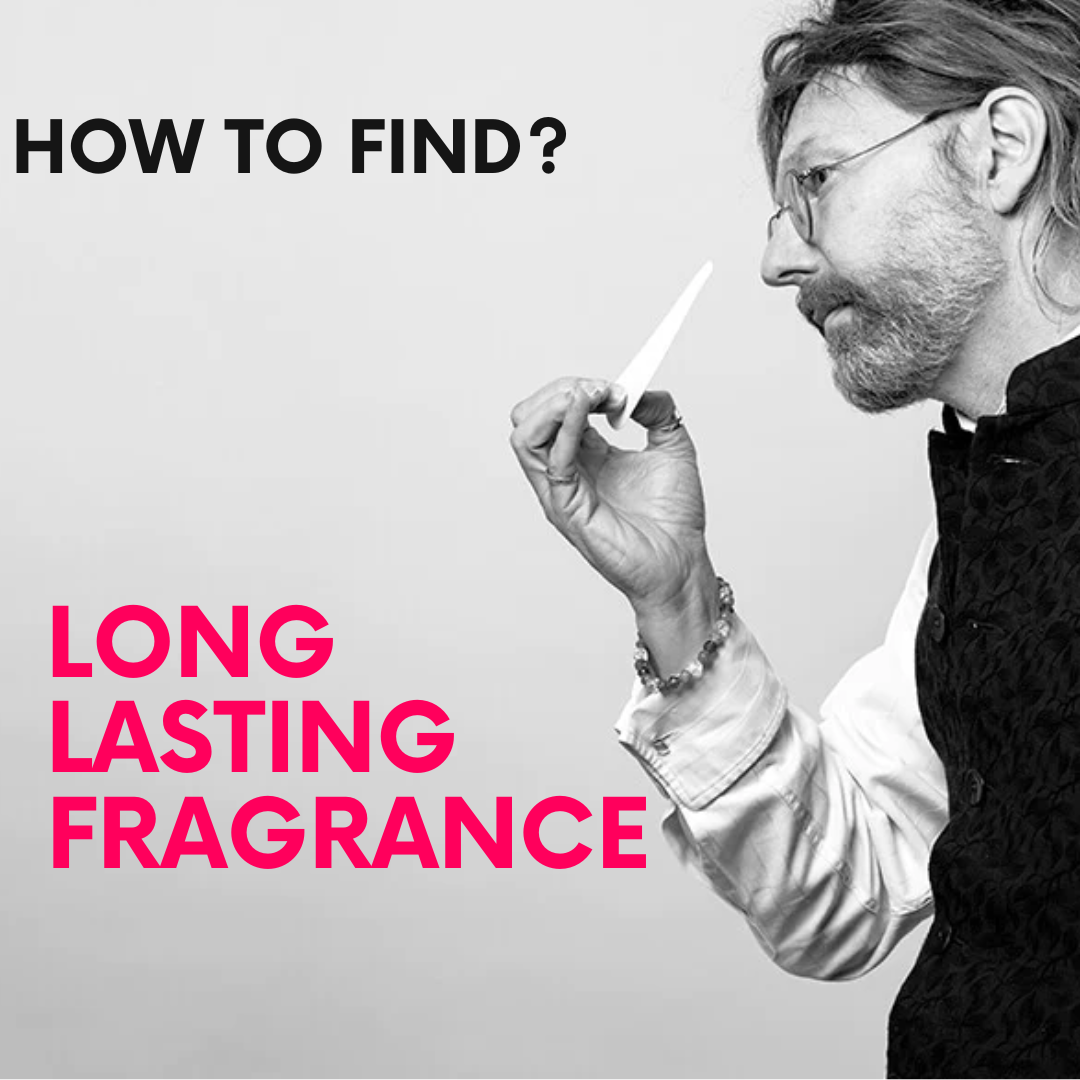
Finding a perfume that smells amazing is easy. Finding one that still smells good after several hours is a completely different story. Many fragrances smell impressive when you first spray them but seem to disappear shortly afterward. That can be frustrating, especially when you have spent good money on a bottle expecting it to last throughout the day.
The good news is that you do not have to rely only on a perfume advertisement or the first few minutes after spraying. There are several practical ways to check how long a perfume is likely to last before deciding whether it is worth buying. Understanding fragrance concentration, ingredients, skin chemistry, application techniques, and testing methods can help you make a much smarter choice.
If you have ever wondered how to check long lasting perfume, this guide will walk you through the process in a simple but expert way. Whether you are shopping for an everyday fragrance, a perfume for special occasions, or something that can survive a long working day, these tips will help you identify fragrances with better staying power.
What Does “Long Lasting Perfume” Actually Mean?
A long-lasting perfume is a fragrance that remains noticeable for several hours after application. However, lasting power does not necessarily mean that the perfume should smell equally strong from the moment you spray it until the end of the day. Fragrances are designed to develop gradually, and their scent changes as different notes evaporate.
Most perfumes have three stages: top notes, heart notes, and base notes. The top notes are what you notice immediately after spraying, while the heart notes become more noticeable after the fragrance settles. Base notes tend to remain on the skin for the longest period and are responsible for much of the perfume’s dry-down and lasting character.
The important thing is to judge the perfume based on its complete development rather than its opening alone. A fragrance that becomes softer after an hour is not necessarily weak. Sometimes it is simply entering its heart or base stage. A good long-lasting perfume can remain close to the skin while still being detectable several hours later.
Check the Perfume Concentration Before Buying
One of the easiest ways to estimate a perfume’s potential longevity is to check its concentration. Fragrances come in different categories, including Eau Fraîche, Eau de Cologne, Eau de Toilette, Eau de Parfum, and Parfum or Extrait. Generally, products with higher concentrations of fragrance oils have the potential to last longer.
Eau de Toilette, commonly abbreviated as EDT, is often lighter and designed for a fresher fragrance experience. Depending on the formulation, it may last several hours but can fade sooner than a richer fragrance. Eau de Parfum, or EDP, generally contains a higher concentration of aromatic materials and is often a better option when longevity is a priority.
Parfum and Extrait fragrances typically have even higher concentrations and can provide impressive longevity, although concentration alone does not guarantee performance. Two perfumes with similar concentration levels can perform very differently because their formulas, ingredients, and individual compositions are not the same.
Do Not Judge Longevity Immediately After Spraying
One of the biggest mistakes people make when testing perfume is deciding whether it lasts after only 10 or 15 minutes. This is far too early to make a reliable judgment. The opening of a fragrance can be bright and powerful, but some of those initial notes evaporate relatively quickly.
When testing a perfume, give it time to develop. Spray it on your skin and wait at least a few hours before making a final decision. If possible, test it in the morning and see what remains in the afternoon or evening. This gives you a much more realistic idea of its performance.
It is also useful to notice how the fragrance changes rather than simply asking, “Can I smell it as strongly as before?” A perfume may become quieter but still remain present. Your nose can also become accustomed to a scent, making you think it has disappeared when other people can still detect it.
Test Perfume on Your Skin, Not Just on Paper
Paper blotters are useful when comparing several fragrances, but they cannot tell you exactly how a perfume will perform on your skin. Skin has its own temperature, moisture level, natural oils, and chemistry, all of which can influence how a fragrance develops.
For a proper longevity test, apply the perfume to your skin. The wrist or inner arm can work well, although larger areas such as the forearm can make testing easier. Avoid rubbing the fragrance immediately after spraying because friction can alter the way the fragrance develops and can cause the volatile top notes to disappear more quickly.
Try to test the fragrance under normal conditions. If you are planning to wear it during a hot day, testing it in a warm environment can give you useful information. Similarly, a fragrance intended for cooler weather should ideally be evaluated in conditions similar to how you plan to wear it.
Learn to Identify Strong Base Notes
If longevity is your priority, learning a little about fragrance notes can be extremely helpful. Base notes are generally the longest-lasting part of a perfume because they contain heavier aromatic materials that evaporate more slowly.
Common long-lasting base-note families include woods, amber, musk, vanilla, patchouli, vetiver, resins, and certain types of spices. These notes can give a perfume depth and help it remain detectable after the lighter opening has faded.
This does not mean that every perfume containing vanilla or musk will automatically last all day. Fragrance performance depends on the complete formula. However, when a composition has a well-developed base, it often has better potential for longevity than a fragrance built almost entirely around very light and volatile notes.
Perform a Simple Four-to-Eight-Hour Test
One of the most reliable ways to check perfume longevity is surprisingly simple: test it for several hours. Spray a reasonable amount on your skin and record approximately when you applied it. Then check the fragrance at different points during the day.
For example, you can evaluate it after one hour, three hours, five hours, and eight hours. At each stage, notice whether the perfume is still clearly detectable on your skin. You do not need to keep smelling your wrist every few minutes because this can cause your nose to become accustomed to the fragrance.
After several hours, ask someone you trust to smell the area without telling them what you are testing. This can give you a more objective result. If another person can still detect the fragrance even when you think it has disappeared, the perfume may actually have better longevity than you initially believed.
Understand the Difference Between Longevity and Projection
Longevity and projection are two different characteristics, and confusing them can lead to poor perfume choices. Longevity refers to how long the fragrance remains detectable. Projection refers to how far the scent radiates from your skin.
A perfume can have excellent longevity but relatively low projection. In other words, it may last eight hours but remain close to the skin after the first couple of hours. Another fragrance might project strongly for two hours and then become difficult to notice.
Neither characteristic is automatically better. For an office environment, you might prefer moderate projection with good longevity. For a party or evening event, stronger projection may be more desirable. When checking a perfume, therefore, consider both how long it lasts and how strongly it performs during different stages.
Check How the Perfume Performs on Clothes
Testing perfume on clothing can also provide useful information about longevity. Fabric can hold fragrance molecules differently from skin, and some perfumes remain noticeable on clothes long after they have become difficult to detect on the skin.
However, you should be careful when spraying perfume directly onto delicate or light-colored fabrics. Certain fragrance ingredients can leave stains or alter the appearance of materials. When testing a new perfume, it is safer to use a small, inconspicuous area first.
If you notice that the fragrance remains on clothing overnight but disappears from your skin after several hours, that does not necessarily mean the perfume is poor quality. It simply demonstrates the difference between fabric longevity and skin longevity. For a realistic assessment, always evaluate both separately.
Consider Your Skin Type
Your skin can have a surprisingly noticeable effect on perfume performance. People with relatively dry skin may find that some fragrances disappear faster because there is less natural oil for fragrance molecules to interact with.
Moisturized skin can sometimes help fragrance remain noticeable for longer. This is one reason many fragrance enthusiasts apply an unscented moisturizer before using perfume. The moisturizer creates a more hydrated surface without introducing another scent that could interfere with the fragrance.
On the other hand, oily skin can naturally help certain fragrances last longer. Body temperature also matters because warmer skin can increase fragrance diffusion. This means that the exact same perfume can smell stronger and last differently on two different people.
Weather Can Change Perfume Longevity
Temperature and humidity have a major influence on how fragrances behave. Warm weather can make a perfume project more strongly because heat encourages fragrance molecules to evaporate and spread into the air.
That can be beneficial if you want noticeable projection, but it may also make certain lighter notes disappear faster. Cold weather generally slows evaporation, which can make some fragrances feel less powerful initially while allowing heavier base notes to develop gradually.
Humidity can also affect how a perfume smells and performs. Therefore, do not assume that a fragrance tested in an air-conditioned store will behave exactly the same way outdoors on a hot and humid day. Your testing conditions matter more than many people realize.
Be Careful With Online Reviews
Online reviews can be helpful when researching perfume longevity, but they should not be treated as absolute proof. One person may report that a perfume lasts twelve hours, while another may say it disappears after four. Both experiences can be genuine because skin chemistry, climate, application method, and expectations differ.
When reading reviews, look for patterns rather than isolated comments. If hundreds of people consistently describe a fragrance as long-lasting, that is more useful than one enthusiastic review claiming extraordinary performance.
It is also worth checking whether reviewers are talking about the same version of the perfume. Reformulations, different concentrations, and flankers can perform differently. Always make sure the reviews match the exact fragrance you are considering.
Watch Out for Fake or Poor-Quality Perfumes
Sometimes a fragrance appears to have poor longevity simply because it is counterfeit, improperly stored, or from an unreliable source. This is particularly important when purchasing expensive fragrances at unusually low prices.
Check the packaging, bottle quality, batch information where applicable, labeling, and seller reputation. A genuine perfume should generally have consistent packaging and presentation. Be cautious if the box looks poorly printed, the bottle feels unusually cheap, or the fragrance smells dramatically different from an authentic sample.
Storage also matters. Perfumes should generally be kept away from extreme heat, direct sunlight, and significant temperature fluctuations. Poor storage can affect fragrance quality over time, so buying from a trustworthy retailer is just as important as choosing the right fragrance.
How to Test a Perfume Before Purchasing a Full Bottle
If you are unsure about a perfume, do not feel pressured to purchase a full-size bottle immediately. Whenever possible, ask for a sample or purchase a small decant. This gives you enough fragrance to test it in your normal daily routine.
Wear the sample on a typical day rather than only during a quick shopping trip. Notice how it performs while working, traveling, going outdoors, or attending an event. This practical test can reveal much more than a few minutes inside a perfume store.
Also pay attention to whether you enjoy the fragrance after several hours. A perfume may have excellent longevity but become unpleasant to you during its dry-down. The best fragrance is not simply the one that lasts the longest; it is the one that combines longevity, pleasant development, suitable projection, and a scent profile you genuinely enjoy.
Common Mistakes That Make Perfume Seem Weak
Sometimes the perfume is not the problem. The way you apply it can significantly affect how long it remains noticeable. Spraying onto extremely dry skin, rubbing your wrists together, or applying too little can make a fragrance seem weaker than it actually is.
Another common mistake is spraying perfume and then immediately judging its performance. As mentioned earlier, fragrance development takes time. You should evaluate the dry-down rather than relying only on the initial blast of scent.
Overspraying can also be counterproductive. When you become surrounded by a fragrance, your sense of smell can quickly adapt to it. This is called olfactory fatigue or nose blindness. You may think the perfume has disappeared even though people around you can still smell it clearly.
A Quick Checklist for Checking Long-Lasting Perfume
When testing a fragrance, keep the process simple. First, check whether it is an EDT, EDP, Parfum, or another concentration. Then test it directly on your skin instead of relying only on a paper strip.
Give the fragrance several hours to develop and check how it smells during the opening, heart, and dry-down stages. Pay attention to both longevity and projection because they are not the same thing.
Finally, consider your skin type, the weather, application method, and the source from which you are purchasing. If a fragrance performs well under realistic conditions and you still enjoy its scent after several hours, it is much more likely to be a good choice for you.
Final Thoughts
Knowing how to check long lasting perfume can save you from buying fragrances based solely on attractive packaging, advertising claims, or a strong first impression. The real test begins after the opening fades. A quality fragrance should develop naturally and continue to offer an enjoyable scent throughout its wearing period.
The best approach is to test perfume on your own skin, give it several hours, understand the difference between projection and longevity, and pay attention to its base notes and overall formulation. Remember that fragrance performance is personal. What lasts all day on one person may perform differently on another.
Instead of asking only, “How strong is this perfume?” ask a better set of questions: How long does it last on my skin? How does it smell after several hours? Does the dry-down remain pleasant? Is the projection appropriate for where I plan to wear it? Once you start evaluating perfumes this way, choosing a genuinely long-lasting fragrance becomes much easier.